Supervisor, Mentor, or Manager?
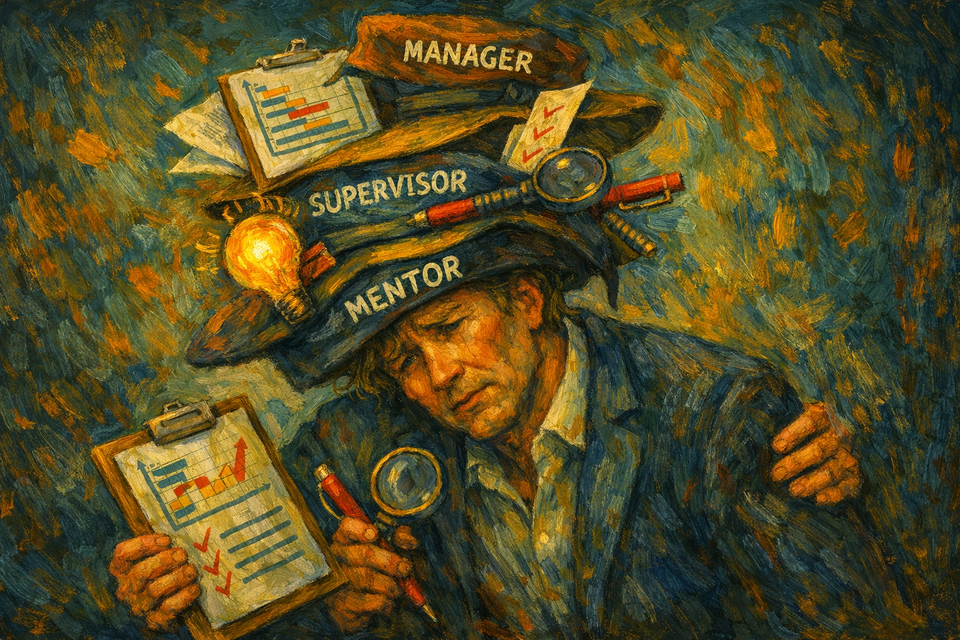
There are many academia-specific keywords: “grant”, “stipend”, “precarity”. But what is the correct designation for the leader of a research group who writes projects, manages people, supervises students, etc?
Manager? Supervisor? Mentor? Because these are very different concepts.
It could be easier to stick with the concept of “principal investigator” (aka PI), I know. But, let’s face it, that word ends up being a little bland right? Especially when talking to people outside the academic context.
Yes, grandma, I have a meeting with my principal investigator tomorrow.
Let’s label things
So, let’s set some brief distinctions between what each designation might convey, shall we?
Manager – Focuses on getting output. Sets timelines. Measures key performance indicators (“KPIs”, if you want to sound cool.).
Supervisor – Oversees the work. Evaluates the progress and (hopefully) gives feedback. Has that “senior” responsibility of orienting the person/project as a whole.
Mentor – Guides a mentee on a more “transversal” perspective. Focuses on growth. Sets a trust relationship, focusing on long-term development.
Now, is a MSc/PhD/Postdoc supervisor all of these?
Hahaha. Usually no.
Should it be?
I’d argue yes, but… *man shrugging emoji* (no, I didn’t forget to replace this with an actual emoji. I was just lazy. Use your own imagination, dear reader, will ya?).
Who Does Academia Really Reward?
The success of a group leader is many times measured based on specific numbers. Grants won, papers published, impact factors, thesis defended…
This is a more straightforward way of making such measurement, I know. But that makes it so that, many times, the more emotional and human perspectives end up being seen as weaker, right?
Who cares about solving crying PhD students when what matters is the number of papers they publish?
This might sound harsh, I know. But… It doesn’t mean it isn’t true.
PIs may act like managers because the system pays them to, and at the same time be called mentors because it sounds nicer on a website.
And what does this cause, kids?
✨ Cognitive dissonance ✨
(Yes, I took the effort of placing the emojis in this case. But only because it makes the sarcasm much more emphatic)
The Inevitable Power Dynamics?
Can mentorship be real when the same person signs your contract, controls your funding, decides your authorship, writes your reference letters, etc...?
Is it mentorship if you can’t safely disagree?
One might argue that there are examples of PIs who are also great mentors. I’m not saying it’s impossible. It’s just more… let’s say… emotionally demanding. And most people are not willing to make that effort.
But Would We Really Need All Those Different Roles From a PI?
I would argue it would be nice to learn different things:
From a manager - How to meet deadlines, optimize output, and survive stress.
From a supervisor - How to comply, perform, not mess up.
From a mentor - How to think, choose, fail, and stand up again.
And one can easily reflect on how many people have left academia, not because of science, but because they never had access to the third one.
If it seems unreasonable for those three roles to be asked from the same person, what if students were assigned different people as scientific supervisors, career mentors, and independent advisors?
Academia collapses three distinct roles into one person, rewards only one of them, and then acts surprised when people burn out.
In the end, maybe the problem isn’t only that supervisors fail to be mentors.
But also that the academic system keeps confusing management with care.

Comments ()